
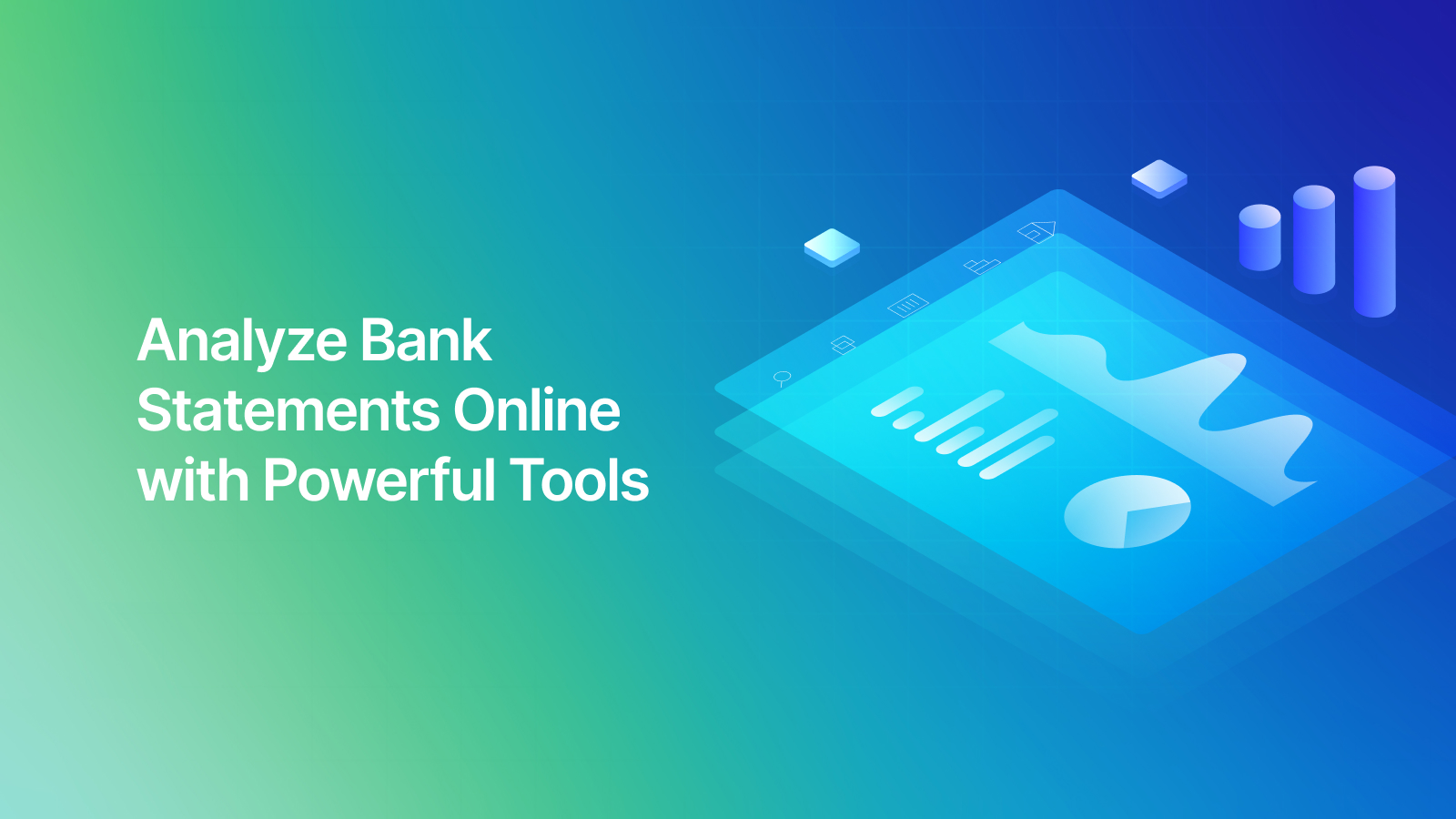
Analyze Bank Statements Online with Powerful Tools
Discover how to manage and analyze bank statement data online using advanced tools for better financial insights and decision-making.
Bank statement analysis is a critical process for assessing financial health, tracking cash flow, and making informed financial decisions.
Whether you’re a business owner, accountant, or individual managing personal finances, analyzing bank statements provides valuable insights into spending patterns, income sources, and overall financial stability.

Bank statements reveal spending and financial stability.
Key Benefits of Online Bank Statement Management
Managing bank statements online offers several advantages:
- Time savings through automated data extraction and processing
- Improved accuracy by reducing manual data entry errors
- Enhanced security features to protect sensitive financial data
- Real-time access to financial information from multiple sources
- Scalability to handle large volumes of transactions
Essential Features of Bank Statement Analysis Tools
When choosing an online bank statement management solution, look for these key capabilities:

Online banking: convenience meets modern financial tools.
- Automated data extraction using OCR technology
- AI-powered transaction categorization and analysis
- Anomaly detection to identify unusual transactions
- Tamper-proof checks to ensure data integrity
- Integration with accounting software and ERPs
- Customizable reporting and data visualization
Step-by-Step Guide to Online Bank Statement Analysis
1. Gather Bank Statements
Collect digital bank statements from all relevant accounts.
Many tools offer direct bank connections to automatically fetch statement data.
2. Upload or Import Statements
Upload PDF statements or use automated bank feeds to import transaction data into your chosen analysis tool.
3. Extract Data with OCR
For uploaded documents, OCR technology scans and extracts key financial details, eliminating manual data entry.

OCR technology simplifies financial data extraction.
4. AI-Powered Analysis
Advanced tools use artificial intelligence to:
- Match names and verify date ranges
- Calculate total income across sources
- Categorize expenses
- Analyze income patterns
- Detect anomalies or suspicious activity
5. Generate Financial Insights
Review automatically generated reports that provide:

Streamline reporting with automated security reviews.
- Income and expense breakdowns
- Cash flow analysis
- Spending pattern visualizations
- Financial health indicators
6. Take Action Based on Insights
Use the analysis results to:
- Create or adjust budgets
- Identify areas for cost reduction
- Forecast future cash flows
- Make informed financial decisions
Choosing the Right Bank Statement Analysis Tool
When selecting a solution, consider factors such as:
- Ease of use and user interface
- Accuracy of data extraction and categorization
- Security features and data protection measures
- Integration capabilities with existing financial systems
- Pricing and scalability for your needs
- Customer support and training resources
Maximizing the Value of Bank Statement Analysis
To get the most out of your bank statement analysis efforts:
- Regularly review and analyze statements (monthly or quarterly)
- Use standardized categorization methods for consistency
- Leverage automation to reduce errors and save time
- Collaborate with financial experts for deeper insights
- Stay updated on accounting standards and best practices
- Continuously refine your analysis process based on results
By implementing these strategies and utilizing powerful online tools, you can transform raw bank statement data into actionable financial intelligence.
This drives better decision-making and improved financial management for your business or personal finances.
Latest articles